Empower Complex Business Operations with Intelligent Enterprise ERP
Microsoft Dynamics 365 Finance & Operations helps organizations manage complex financial, supply chain, and operational processes through an integrated enterprise resource planning platform. With powerful financial management, operational visibility, and scalable business capabilities, organizations can improve efficiency, strengthen control, and make informed decisions.
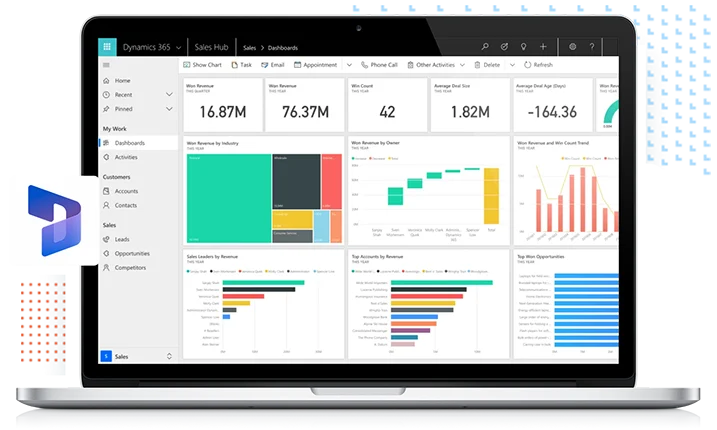

Why Choose Dynamics 365 Finance & Operations?
Centralized Financial Management
Manage financial transactions, accounting structures, budgeting, reporting through integrated business.
Improved Operational Visibility
Connect financial and operational information to provide better insight into business performance.
Scalable Enterprise Operations
Support business expansion with a platform designed for complex organizational requirements.
Multi-Entity Business Operations
Support complex organizational structures, multiple legal entities, currencies, and financial dimensions.
Standardized Business Processes
Establish consistent workflows and controls across departments, locations, and business units.
Data-Driven Decision-Making
Use connected data and analytics to improve planning, financial control, and operational decisions.
Connect Finance & Operations with Microsoft Technologies
Microsoft Dynamics 365 Finance & Operations can work with other Microsoft technologies to support connected business processes, data integration, analytics, and productivity.



Enterprise ERP Solutions Across Industries
Microsoft Dynamics 365 Finance & Operations can support organizations with complex financial and operational requirements across multiple industries.
✓ Manufacturing
✓ Distribution
✓ Retail & Commerce
✓ Food & Beverage
✓ Chemical
✓ Mining & Resources
✓ Logistics
✓ Multi-Entity Organizations
Microsoft Dynamics 365 Finance & Operations Capabilities
Financial Management
Manage general ledger, accounts receivable, accounts payable, budgets, cash flow, bank reconciliation, and fixed assets with greater financial control and visibility.
Sales Management
Manage the sales cycle from quotations and sales orders to invoicing, pricing, customer relationships, opportunities, and sales interactions.
Purchasing Management
Streamline purchasing and vendor processes with purchase orders, vendor management, pricing, discounts, approvals, and vendor item catalogs.
Inventory Management
Improve inventory control with item management, substitutions, returns, shipping, drop shipments, and automated replenishment based on stock levels.
Project Management
Plan and manage jobs, resources, capacity, budgets, estimates, and project costs to improve control and profitability.
Business Management
Support connected business operations with multiple currencies, dimensions, workflows, reporting, audit trails, document management, OCR, and data migration capabilities.
Your Trusted Microsoft ERP Implementation Partner
Implementing an enterprise ERP requires more than selecting the right technology. It requires a clear understanding of business processes, organizational requirements, data, integrations, and long-term objectives.
MikroOne helps organizations plan, implement, and optimize Microsoft business technologies through a business-focused approach and end-to-end consulting services.
✓ Microsoft Expertise
✓ Business-Focused Approach
✓ Industry Understanding
✓ End-to-End Implementation
✓ Integration & Customization
✓ Long-Term Partnership


Ready to Transform Your Enterprise Operations?
Take the next step toward better financial control, operational visibility, and scalable business management with Microsoft Dynamics 365 Finance & Operations. MikroOne helps organizations explore Microsoft business technologies and develop solutions aligned with their operational requirements and long-term growth objectives.
Frequently Asked Questions
What is Microsoft Dynamics 365 Finance & Operations?
Microsoft Dynamics 365 Finance & Operations refers to Microsoft’s enterprise business application capabilities for managing complex financial and operational processes. It includes Dynamics 365 Finance and related applications, such as Supply Chain Management, which can be combined to address broader ERP requirements.
What is Microsoft Dynamics 365 Finance used for?
Dynamics 365 Finance helps organizations manage financial operations, including general accounting, accounts payable, accounts receivable, budgeting, cash management, fixed assets, financial reporting, and financial analysis.
What is the difference between Dynamics 365 Finance and Business Central?
Business Central is designed for organizations seeking an integrated ERP solution for core business management. Dynamics 365 Finance is designed for more complex financial management requirements and can be combined with other Dynamics 365 applications to support broader enterprise operations.
Can Dynamics 365 Finance & Operations support manufacturing?
Yes. Dynamics 365 Finance & Operations can support manufacturing requirements through relevant capabilities and applications, including production planning, materials management, costing, and supply chain operations.
Can Dynamics 365 Finance & Operations support multiple companies?
Yes. Dynamics 365 Finance supports multi-entity financial management, making it suitable for organizations that operate through multiple legal entities, business units, currencies, or locations.
Can Dynamics 365 Finance & Operations integrate with Power BI?
Yes. Dynamics 365 Finance can integrate with Power BI to support financial and operational reporting, analytics, and business performance insights.
Can Dynamics 365 Finance & Operations integrate with Microsoft Azure?
Yes. Azure services can support integrations, application development, cloud infrastructure, security, and other enterprise technology requirements.
Can Dynamics 365 Finance & Operations be customized?
Yes. Organizations can extend the platform through supported configuration, extensibility, integrations, and development approaches to address specific business requirements.
How long does a Dynamics 365 Finance & Operations implementation take?
Implementation timelines depend on the scope, number of applications, business complexity, integrations, data migration, customization, and organizational readiness. A detailed assessment is required to establish a realistic project timeline.